Current human research into benefits of NMN supports its ability to increase NAD-related metabolites, but evidence for wider health or anti-ageing benefits of NMN remains mixed. (PubMed)
NMN Benefits: What Does the Science Say?
Nicotinamide mononucleotide (NMN) is a naturally occurring molecule and a precursor to NAD+ (nicotinamide adenine dinucleotide), a compound involved in cellular energy metabolism and several important biological processes. Because NAD+ levels and metabolism are associated with ageing, NMN Benefits have attracted considerable interest as a potential healthy ageing and longevity supplement. (Nature)
But what are the potential NMN benefits, and how strong is the evidence?
Potential Benefits of NMN
1. May Increase NAD+ Levels
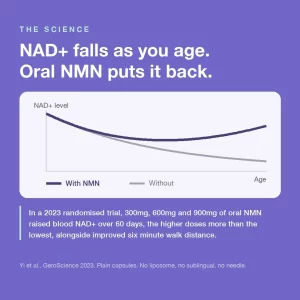
One of the most consistently demonstrated benefits of NMN supplementation is an increase in NAD-related metabolites.
NAD+ plays an important role in energy metabolism, cellular signalling and other biological processes. Human clinical studies have shown that oral NMN can increase NAD-related metabolites in the blood. (PubMed)
Evidence: Relatively strong for the biological benefits of NMN with the effect of increasing NAD-related metabolites; less certain regarding what this means for long-term health.
2. May Support Cellular Energy Production
NAD+ is involved in the conversion of nutrients into cellular energy. It participates in metabolic pathways including glycolysis, the citric acid cycle and fatty-acid oxidation. (Nature)
This has led to interest in NMN as a way of supporting normal cellular energy metabolism.
However, it is important to distinguish between NMN increasing NAD-related metabolites and proving that NMN supplementation produces noticeable increases in everyday energy or vitality.
Evidence: Biological rationale is strong, but evidence for noticeable improvements in human energy levels is currently limited.
 3. May Support Healthy Ageing
One of the benefits of NMN is particularly associated with research into ageing and longevity because NAD+ metabolism is involved in processes associated with cellular ageing.
Animal research has produced numerous interesting findings, but translating these findings into human health benefits is considerably more difficult. Recent reviews conclude that human clinical evidence for anti-ageing effects remains limited. (Nature)
Evidence: Promising research area on benefits of NMN, but human evidence remains inconclusive.
4. May Support Physical Performance
Researchers have investigated whether NMN can influence exercise capacity and physical performance.
A systematic review of randomised controlled trials involving 437 participants found that benefits of NMN has been investigated for several physical-performance outcomes. However, the relatively short duration and limited number of studies mean that stronger evidence is still required. (PubMed)
A recent 24-week trial in adults aged 65 and over found that high-dose NMN increased NAD-related metabolites but did not significantly improve the study’s primary auditory outcome or physical-performance measures. (Nature)
Evidence: Interesting but currently mixed.
5. May Support Metabolic Health
NMN has been studied for its potential effects on glucose metabolism, insulin sensitivity and blood lipids.
However, a meta-analysis of randomised controlled trials found no significant overall benefits of NMN for fasting glucose, fasting insulin, HbA1c, insulin resistance or lipid profiles. (PubMed)
Another systematic review similarly concluded that clinically important metabolic benefits have not yet been established. (PubMed)
Evidence: Currently insufficient to claim that NMN improves metabolic health.
6. May Have Cardiovascular and Vascular Benefits
Because NAD+ is involved in cellular and metabolic processes, NMN has also been investigated for potential effects on vascular health.
One 12-week human study found that NMN increased NAD-related metabolites and observed a trend towards reduced arterial stiffness, although the difference between NMN and placebo was not statistically significant. (Nature)
Research into blood pressure is also emerging, but this is not yet sufficient to establish NMN as a treatment for hypertension. (PubMed)
Evidence: Early and promising, but more research is needed.
7. May Support Muscle and Exercise Metabolism
NMN’s relationship with NAD+ has generated interest in skeletal muscle because NAD+ is involved in energy production and metabolic regulation.
Some human research has reported changes in muscle-related metabolic measures, but results across clinical trials have not been consistent enough to establish a definite performance-enhancing effect. (PubMed)
Evidence: Early-stage human evidence.
8. May Support Healthy Cellular Function
NAD+ is involved in several important cellular processes, including energy metabolism, DNA repair and signalling pathways. NMN provides a precursor that can contribute to NAD+ metabolism. (Nature)
This provides much of the scientific rationale behind NMN research.
It should not, however, be interpreted as evidence that taking NMN will prevent or reverse age-related diseases.
Evidence: Strong biological rationale; clinical benefits remain under investigation.
NMN Benefits: What We Know So Far
Biological effects that have been demonstrated and potential health benefits that are still being researched.
| Potential NMN benefit | Current evidence |
|---|---|
| Increase NAD-related metabolites | Good evidence |
| Support NAD+ metabolism | Good evidence |
| Cellular energy metabolism | Strong biological rationale |
| Healthy ageing | Promising but inconclusive |
| Physical performance | Mixed evidence |
| Metabolic health | Currently limited |
| Blood glucose control | No consistent benefit demonstrated |
| Cardiovascular/vascular health | Early evidence |
| Muscle function | Under investigation |
| Longevity | Not established in humans |
A 2026 systematic review of NAD-boosting interventions concluded that NMN and related compounds demonstrate clear biological activity in humans, but effects on functional, metabolic, vascular and other health span outcomes remain heterogeneous or absent in many studies. (PubMed)
Is NMN Safe?
Human trials so far have generally found oral NMN to be well tolerated over relatively short periods. For example, a randomized study involving 31 healthy adults found that 1,250 mg per day for four weeks produced no serious adverse events. (Nature)
More recent evidence covering studies lasting up to 24 weeks has also reported favourable short-term tolerability, although researchers continue to emphasise the need for larger and longer studies to establish long-term safety. (PubMed)
Importantly, “well tolerated in clinical trials” does not mean that NMN has been proven safe for everyone or that long-term supplementation is risk-free.
The Bottom Line on NMN Benefits
NMN is an interesting NAD+ precursor that has generated significant scientific interest because of its potential role in cellular metabolism and healthy ageing.
The strongest human evidence currently supports the ability of NMN supplementation to increase NAD-related metabolites. Evidence for broader benefits—including improved energy, physical performance, metabolic health, cardiovascular health, longevity and anti-ageing effects—is considerably less certain. (PubMed)
📅 Last updated: